
My neighbor signed his son up for Little League last summer with exactly one goal in mind — less screen time. By October, that boy was running backyard practices, coaching younger kids on the street, and texting his dad game scores from his tablet. Nobody saw that coming. Nobody planned it.
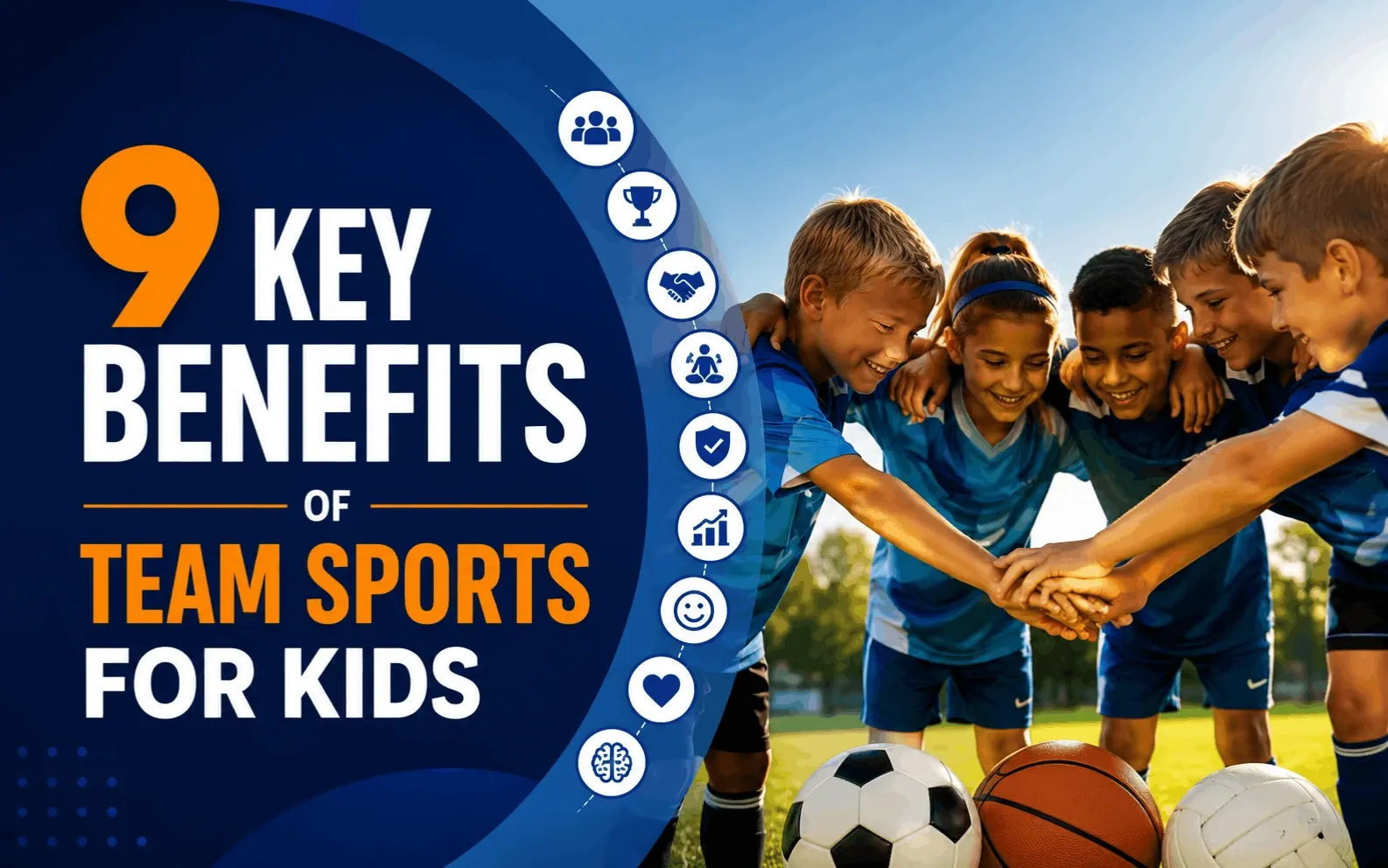
That’s what team sports quietly do to kids. You sign them up for one reason and get back something much bigger. The benefits of team sports for kids go way beyond burning calories — they shape character, build friendships, and teach lessons that honestly stick longer than anything learned in a classroom.
Physical Health Gains
Builds Strength and Endurance
No kid ever laced up cleats thinking, “Great, time to improve my cardiovascular fitness.” They’re thinking about the game. And that’s exactly why it works. Two or three practices a week, weekend games, and a full season—without realizing it, a child’s lungs get stronger, their legs get more powerful, and their reaction time sharpens. The effort compounds because they keep showing up. Not because anyone made them. Because they want to.
If your child is drawn to basketball, looking into youth basketball drills for kids shows you quickly how structured team play turns into genuine physical development — not just running around.
Fights Childhood Obesity
You can tell a kid to go outside and move more. Good luck with that. But hand that same kid a jersey and a spot on a roster? Suddenly they’re active three times a week without a single argument. That’s the real lever here—motivation. Team sports make movement feel like belonging, not exercise. For a country still wrestling hard with childhood obesity rates, that distinction matters more than any wellness campaign.
Improves Coordination
Timing a chest pass. Tracking a fly ball while your feet move underneath you. Cutting left while your eyes stay right. These happen dozens of times per game, and every single repetition is quietly training the brain and body to communicate faster. Kids who play team sports develop coordination that bleeds into everything else—gym class, music, even just navigating a crowded hallway without bumping into everyone.
Social and Emotional Growth
Fosters Teamwork and Communication
A selfish player in a team sport doesn’t last long. Kids figure this out fast — faster than most adults expect. You pass even when you want to shoot. You cover the teammate who got caught out of position. You call and you listen. Understanding team roles in volleyball makes this concrete — every single position depends on the others. One person misses their assignment, and the whole play collapses. No classroom can fully replicate that kind of immediate, felt accountability.
Worth noting: research confirms it too. Studies show that youth sport participation outcomes include measurably better self-esteem, fewer depressive symptoms, and stronger social skills built directly through team involvement.
Boosts Confidence and Resilience
This is the one most parents don’t see coming. The benefits of team sports for kids hit hardest right here. Your child will miss the shot in front of everyone. They’ll have a game so bad they want to disappear. They’ll lose a match they trained weeks to win. And then Tuesday rolls around and they show up to practice anyway. That cycle — struggle, feel it, recover, go again — builds something that can’t be faked or handed to a kid. It has to be earned. Sports make kids earn it over and over, which is exactly why they stick.
Reduces Stress and Anxiety
Kids carry more weight than they let on. Academic pressure, social stress, the relentless noise of phones and screens — it piles up somewhere. An hour of hard physical effort with a team burns through that tension in a way that talking about feelings never quite does. Parents notice it first. Their child comes home from practice calmer, more settled, and easier to actually reach. That’s not a coincidence. That’s youth mental health playing out quietly in your kitchen on a Tuesday night.
Cognitive and Academic Perks
Enhances Focus and Discipline
When a coach calls a play and there are three seconds on the clock to execute it, daydreaming isn’t an option. Consequences are immediate and real. Miss your mark, and the other team scores. That feedback loop trains kids to lock in—and it transfers directly. Teachers notice it. Parents notice it. The same child who used to fight every homework session starts finishing assignments with less resistance. The connection between physical discipline and academic focus is genuinely underrated.
Teaches goal setting.
Every season runs like a natural goal-setting cycle. The team wants the playoffs. Your kid wants more playing time. The coach wants cleaner footwork by week five. Children who move through these cycles repeatedly—set a target, work toward it, and be honest about the result—build a skill that serves them everywhere. Even something like understanding the basketball court — its zones, its rules, its strategy — trains the kind of structured thinking that shows up later in how kids approach problems that have nothing to do with sports.
Long-Term Life Skills
Leadership and Perseverance
Talk to high-performing adults across almost any field, and a surprising number will trace something back to a youth sports team. Not because they went pro — most didn’t. Because sport taught them to lead when the pressure was real, to keep going when quitting felt completely reasonable, and to show up for people depending on them. Those aren’t soft extras. They’re the foundation. The distance from a kids’ rec league to team sports at the professional level is long, and most won’t walk it—but every child who plays builds something real and lasting along the way.
Getting Started Safely
Age-Appropriate Tips for USA Parents
Keep it simple early. For kids under eight, the only real goal is fun — not rankings, not specialization, not elite anything. Find a league that rotates positions, plays everyone equally, and doesn’t take the score too seriously. As your child gets older and gravitates toward something specific, follow that pull. Most communities across the USA have organized youth leagues starting around age five or six. The mistake worth avoiding is picking the sport for your child instead of picking it with them. Spending time choosing the right sport for your child — matching it honestly to their personality, energy, and social style — makes a real difference in whether they stick with it or quietly quit by spring.
Conclusion
Team sports build kids who are fitter, tougher, and genuinely better with people. Sign yours up. The results will surprise you.