
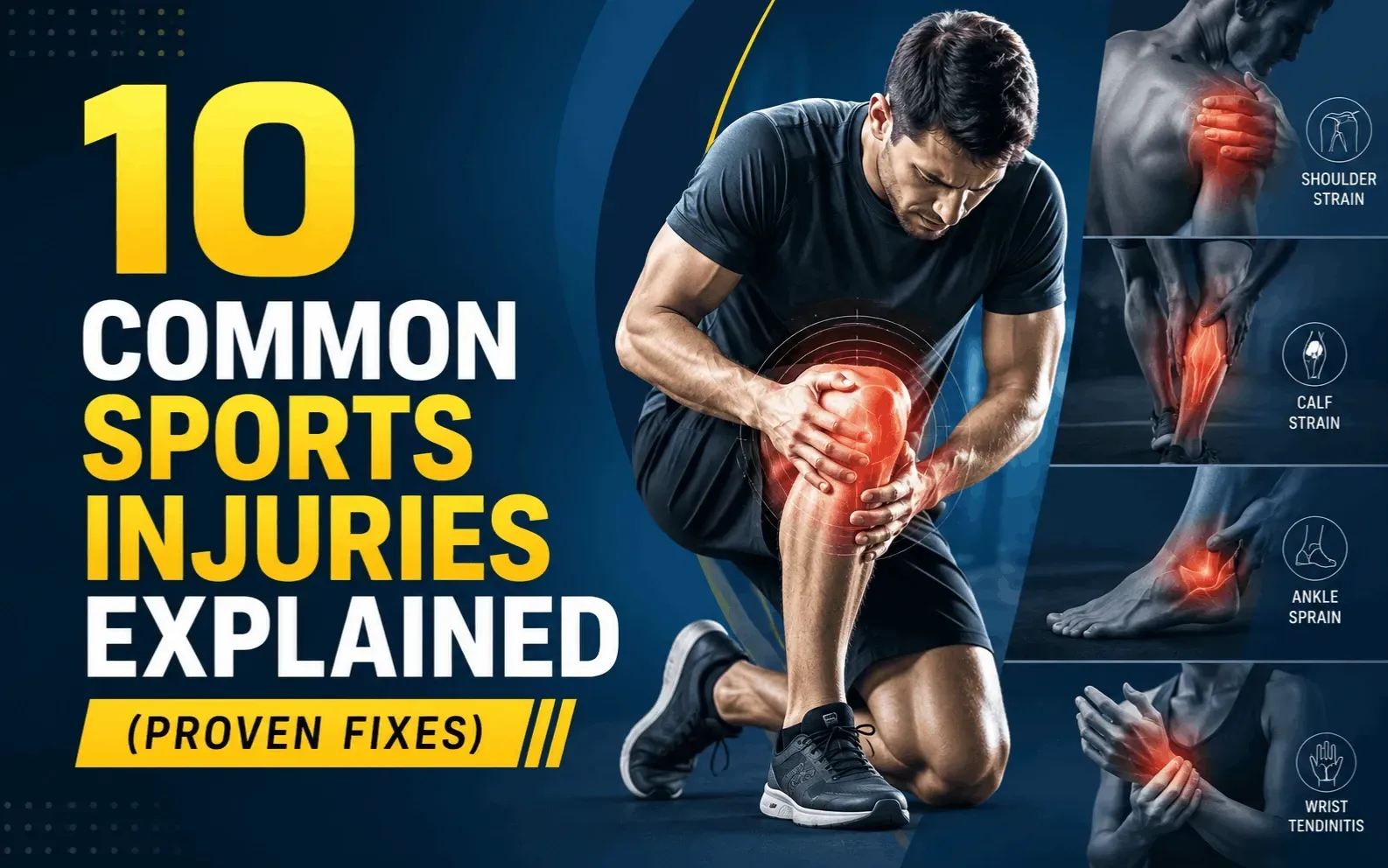
If you’ve ever pushed too hard during a workout or twisted your ankle on the field, you know how quickly things can go wrong. Below, you’ll find common sports injuries explained in plain language, so you’ll know what’s happening to your body and how to bounce back faster.
Why Sports Injuries Happen
Most injuries don’t come out of nowhere. They usually build up over time or strike suddenly during intense activity. Understanding the root cause helps you avoid repeat trips to the sidelines. According to a sports injury overview from Cleveland Clinic, these injuries often result from a mix of physical strain, poor preparation, and bad luck.
So what are the common causes of sports injuries? Fatigue, dehydration, and skipping warm-ups all play a role. Your age, fitness level, and even the gear you use can tip the scales toward injury or safety. Let’s break down the two biggest factors below.
Overuse vs. Acute Trauma
Overuse injuries creep up slowly. Think of a runner who logs too many miles without rest—their knees or shins eventually rebel. Acute trauma, on the other hand, happens in a flash: a bad landing, a hard tackle, or an awkward twist. Both types can sideline you, but they need different approaches to heal properly.
Risk Factors (Age, Conditioning, Equipment)
Your age matters more than you’d think. Younger athletes often have growing bones that are more vulnerable, while older adults deal with stiffer joints and slower healing. Poor conditioning is another culprit—weak muscles can’t absorb shock as well. And don’t underestimate equipment. Worn-out shoes or ill-fitting gear can quietly set you up for trouble.
Top 10 Common Sports Injuries
Now let’s get into the types of sports injuries you’re most likely to encounter, whether you’re a weekend warrior or a competitive athlete. Each one comes with its own warning signs and quirks.
Sprained Ankle
This happens when ligaments stretch or tear, usually from rolling your foot inward. You’ll notice swelling, bruising, and pain when bearing weight. If you’re wondering how to treat a sprained ankle, rest and ice are your first line of defense.
ACL Tear
The ACL is a key knee ligament, and tearing it often comes with a loud “pop.” Swelling follows fast, along with instability. Signs of a torn ligament also include difficulty straightening the knee fully.
Hamstring Strain
Sprinters and soccer players know this one well. A sudden, sharp pain in the back of the thigh signals a pulled or torn muscle fiber, often during explosive movements.
Shin Splints
Runners frequently deal with this dull ache along the shinbone. It’s an overuse injury caused by repetitive stress, especially when training intensity ramps up too quickly.
Tennis Elbow
Despite the name, this affects more than tennis players. Repetitive wrist motion irritates the tendons on the outside of the elbow, causing tenderness and weak grip strength.
Rotator Cuff Injury
Swimmers, throwers, and weightlifters often strain this group of shoulder muscles. Pain worsens with overhead movement, and lifting your arm may feel surprisingly difficult.
Concussion
A blow to the head can cause a concussion, even without losing consciousness. Headaches, confusion, and dizziness are red flags that shouldn’t be ignored, ever.
Stress Fractures
These tiny cracks in bone develop from repeated impact, common in runners and dancers. The pain often starts mild but worsens with continued activity.
Plantar Fasciitis
That stabbing heel pain first thing in the morning? That’s likely plantar fasciitis—inflammation of the tissue connecting your heel to your toes.
Groin Pull
A strained groin muscle causes pain on the inner thigh, often from sudden direction changes. It’s common in soccer, hockey, and basketball players.
How to Treat Sports Injuries at Home
Knowing basic athletic injury treatment can make a huge difference in recovery time. Many minor injuries respond well to simple home care, as long as you catch them early and don’t push through the pain.
The key is listening to your body. If something feels off, don’t wait—early action often prevents a small issue from becoming a bigger one.
The RICE Method
The RICE method for injuries—rest, ice, compression, and elevation—remains the gold standard for minor sprains and strains. Apply ice for 15-20 minutes, wrap the area snugly, and prop it up above heart level. If you’re rebuilding strength afterward, some athletes also turn to strength recovery supplements to support muscle repair.
When Rest Isn’t Enough
Sometimes rest alone won’t cut it, especially with more serious injuries. If you’re dealing with limited mobility during recovery, mobility aids during recovery can help you stay active without risking further damage. Physical therapy for sports injuries often becomes necessary at this stage too.
When to See a Doctor
Not every ache requires a hospital visit, but some signs definitely do. If you’re asking yourself when to see a doctor for sports injury symptoms, pay attention to severe swelling, inability to bear weight, or a visible deformity.
Numbness, prolonged dizziness after a head injury, or pain that doesn’t improve after a few days of home care are also warning signs. When in doubt about common sports injuries explained here, getting checked out is always the safer bet. Injury recovery time can stretch significantly if a serious problem goes untreated.
Preventing Sports Injuries
Prevention beats treatment every time. Building habits that protect your body now saves you weeks of frustration later. Sports injury prevention isn’t complicated, but it does require consistency.
Preventing common athletic injuries starts before you even step onto the field. A little planning goes a long way toward keeping you in the game.
Warm-Up & Stretching
A proper warm-up gets blood flowing to your muscles and preps your joints for movement. Dynamic stretches work better than static ones beforehand. Some athletes like pairing their routine with workout audio accessories to stay motivated and on pace.
Proper Gear and Technique
Wearing the right shoes and protective equipment isn’t optional—it’s essential. Checking out sports gear essentials before your next season can help you avoid gear-related injuries. Combine that with proper technique, and you’ll cut your risk significantly.
FAQs
What’s the difference between a muscle strain vs. a sprain?
A strain affects muscles or tendons, while a sprain involves ligaments connecting bones.
Are overuse injuries in athletes preventable?
Yes—gradual training increases and proper rest days help a lot.
What sports medicine tips help most?
Stay hydrated, warm up properly, and don’t ignore pain signals.